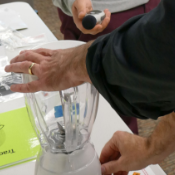
Blender: The blender serves as the noise source for this activity. If you replace the blender in the future, it is important to make sure it is a “noisy” blender and not one of the newer quieter versions. Garage sales are often a great place to find “noisy” blenders to use in the program. We usually use the blender with the lid off as that allows higher sound levels to be generated for the walk away example. An extension cord is included in your Dangerous Decibels kits to make sure your blender can have power. During set-up, prior to starting delivery of the program, it is always a good idea to check that the blender works and identify which setting on the blender produces the highest sound level.
The Dangerous Decibels program has explored the use of other noise sources for this activity, and we continue to find the blender to be the most consistent sound source that works best. It is possible that other sound sources could be used, but it is important that they have specific characteristics to make the activity work well. The “noise” must be at a constantly high sound level and ideally emits a broad spectrum of frequencies. Music is too dynamic and is difficult to measure with a SLM. Others have tried using a blow dryer, but the blowing air flow will cause air turbulence over the microphone and make the sound level measurements inaccurate. If you find another sound source you would like to use, please share your ideas with the Dangerous Decibels online program instructors, as we are always open to new options.